Orabidea
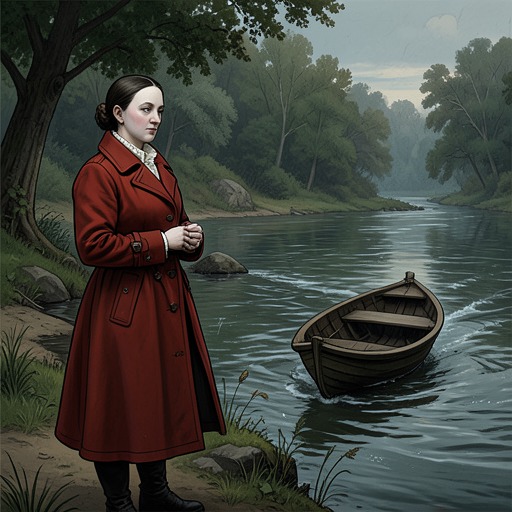
Ofrenda a la tormentaOrabidea is a sparsely traveled rural area of the Baztán Valley where isolation shapes both the landscape and the investigation. Its scattered farmhouses and hard-to-read roads conceal a former commune associated with occult practices, while the surrounding river corridor becomes a map of suspicious infant deaths. The place is at once a physical setting to be searched and a geography through which buried connections emerge.
Landscape and Access
Amaia Salazar approaches Orabidea before dawn, after a brief breakfast, driving from Elizondo toward Oronoz-Mugaire before taking the turnoff. The route passes through a part of the valley where fields and farmhouses seem little changed; some settlements are several kilometers apart, and some farmhouses still lack electricity. Navigation proves unreliable: Amaia’s car system repeatedly loses its satellite signal, and the map on the passenger seat does not show many of the rural buildings. Elena Ochoa’s directions are too vague to indicate whether the destination lies uphill or downhill, leaving one distinctive landmark to guide the search: an immense flat meadow.
A warning about the farmhouse describes it as standing in the only level meadow in the region, without trees or other growth around it. It is difficult to see from above and appears suddenly as the road turns. Its shutters were habitually half-closed. The description makes the approach itself part of the place’s concealment: the house is not prominent in the landscape but disclosed abruptly to someone following the road.
The Route to Infernuko Errota
Orabidea’s remoteness is set against the history of Infernuko Errota, the mill James had persuaded Amaia to visit the previous spring. From the Orabidea road, the journey continued for about fifteen kilometers to Etxebertzeko Borda; beyond it, the path could be traveled only on foot or by donkey. The mill was hidden in dense growth, and its setting made access arduous even before the search for the farmhouse began.
Built during the Carlist Wars period, the mill was essential to soldiers who had taken to the mountains. Later, during rationing, people from the valley carried grain there by donkey at night to grind flour for their families. The mill stood on three trunks laid across the river and had wooden walls. The damp, narrow, slippery tracks made the nocturnal journey dangerous, a history that links Orabidea’s secluded paths with the necessities and risks of traveling through the valley after dark.
The Former Commune and the Farmhouse
Amaia identifies Orabidea as the site of a commune established in a farmhouse in the late 1970s and early 1980s. Elena Ochoa had told her that the group began with cultural and spiritual gatherings, then turned toward occultism and the sacrifice of small animals. The possibility of human sacrifice was raised, and Elena left. The group continued for some time after her departure.
When Amaia finds the house, it has become a fully renovated mansion surrounded by security measures. An affluent, apparently retired couple live there; both had belonged to the original group. A neighbor identifies Berasategui’s car without hesitation. The couple acknowledge knowing him but respond to Amaia’s questions about their relationship by handing her the card of Lejarreta y Andía, lawyers. The modernized property and legal defense stand in sharp contrast to Elena’s account of the isolated farmhouse and the commune’s earlier activities.
A Landscape Read as Evidence
Orabidea’s significance extends beyond the search for the former commune. Amaia suspects that Berasategui and Rosario may have stopped somewhere other than the clinic or her aunt’s house, and she considers the farmhouse or another property as a possible safe house. Her reasoning connects the place to the unexplained timing of their journey and to Elena’s knowledge of the old group. The search therefore turns rural isolation into an investigative problem: the same remoteness that could shelter a secret makes the site difficult to locate and verify.
Later, when Amaia reconstructs the infant-death cases on a map, she sees a pattern following the Baztán River rather than simply clustering around a major road. The marked locations extend from Erratzu through Arraioz, including Elbete and Elizondo, and continue toward Oieregi. Her team adds older cases from settlements along the river, including Elizondo and Oronoz-Mugaire, as well as places farther along its course. Orabidea thus belongs to a wider geography of separated farms, river-linked communities, and hidden histories: its isolation first frustrates the search for a house, while the broader map makes the valley’s connections visible.